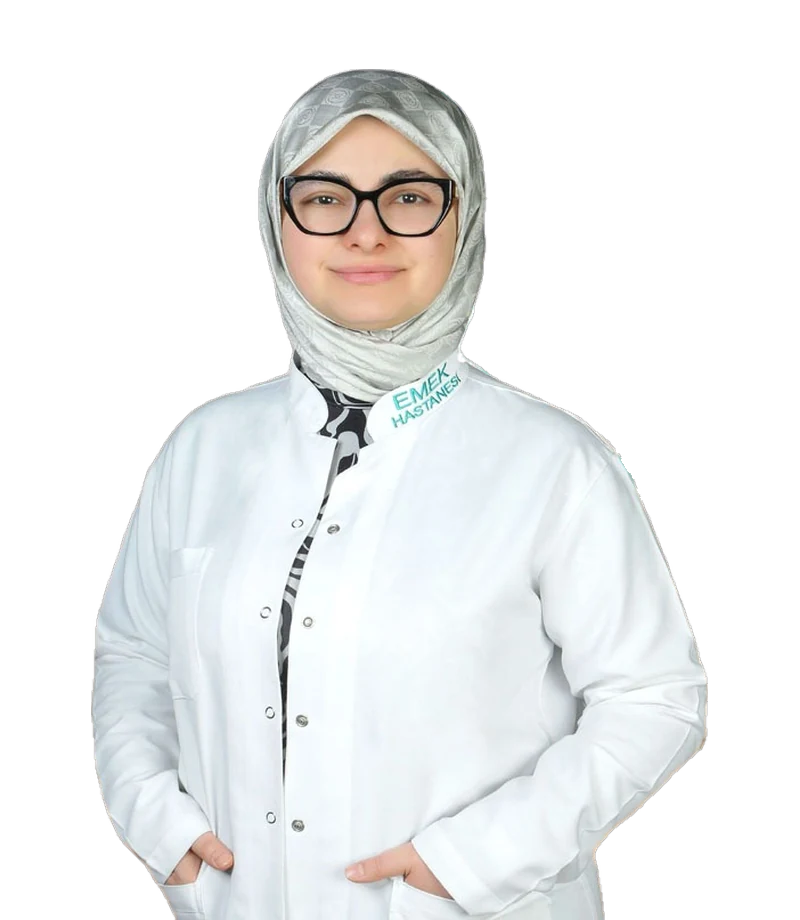
Op. Dr.Elif Kevser Kibar
Obstetrics and Gynaecology
Book an appointmentAppointment
Not sure which department to go to?
Type your symptoms and we'll show you the right department and doctor.
Find a department by complaintDepartment
At certain stages of their lives, women visit the obstetrics and gynaecology department because of health complaints or for routine check-ups.
Our Doctors
Obstetrics and Gynaecology
Book an appointmentObstetrics and Gynaecology
Book an appointmentThis department covers the diagnosis and treatment of all diseases of the female reproductive organs…
Women visit the obstetrics and gynaecology department at certain stages of their lives, either because of complaints or for routine check-ups. This department covers the diagnosis and treatment of all diseases of the female reproductive organs. It also offers treatment options for pregnancy and for resolving pregnancy-related problems. Topics such as infertility, insemination and IVF also fall within the scope of obstetrics and gynaecology.
The department known as obstetrics and gynaecology has a number of subspecialties, such as reproductive endocrinology and infertility, and perinatology. Reproductive endocrinology and infertility refers to infertility. Infertility, which arises from a wide variety of causes, can be resolved with IVF. If patients are suitable for IVF treatment, they can benefit from it. Infertility, once a very serious problem, is no longer seen as an insurmountable one thanks to today's treatment options.
The treatments to be applied are planned on the basis of the patient's age and how long the infertility has lasted. If the woman has irregular ovulation, follicle monitoring can be carried out. If the patient is suitable for treatment, ovulation induction and insemination treatment can be started. If no result is achieved, IVF treatment can be applied. The specialist must decide which method will be used. To do so, the patient should be examined and a treatment plan drawn up according to her condition.
You should visit an obstetrics and gynaecology department in cases such as irregular periods, infertility, vaginal dryness, being unable to get pregnant, pain during sexual intercourse, very light or very heavy menstrual bleeding, tissue coming from the vagina, low sexual desire, period pain, periods starting at an early age, being unable to have children, or the absence of a first period. The department where treatments for women's diseases are provided is where patients who come with such complaints are examined and treated. So if you have complaints like these, you should see an obstetrics and gynaecology specialist without delay.
A gynaecological examination, performed by a gynaecologist, begins with a review of the problems relating to the patient's own condition. Once the problem has been identified, treatment can begin. The information obtained during a gynaecological examination stays between the patient and the doctor. This confidential information remains between you and your gynaecologist. To allow early diagnosis, it is important to have regular gynaecological examinations.
A gynaecological examination can be carried out even if the patient is having her period. However, because of the bleeding, the cervix may not be clearly visible, so a smear test cannot be performed. This examination is very important for early diagnosis and treatment. You should have a gynaecological examination at least once every 6 months.
Other departments