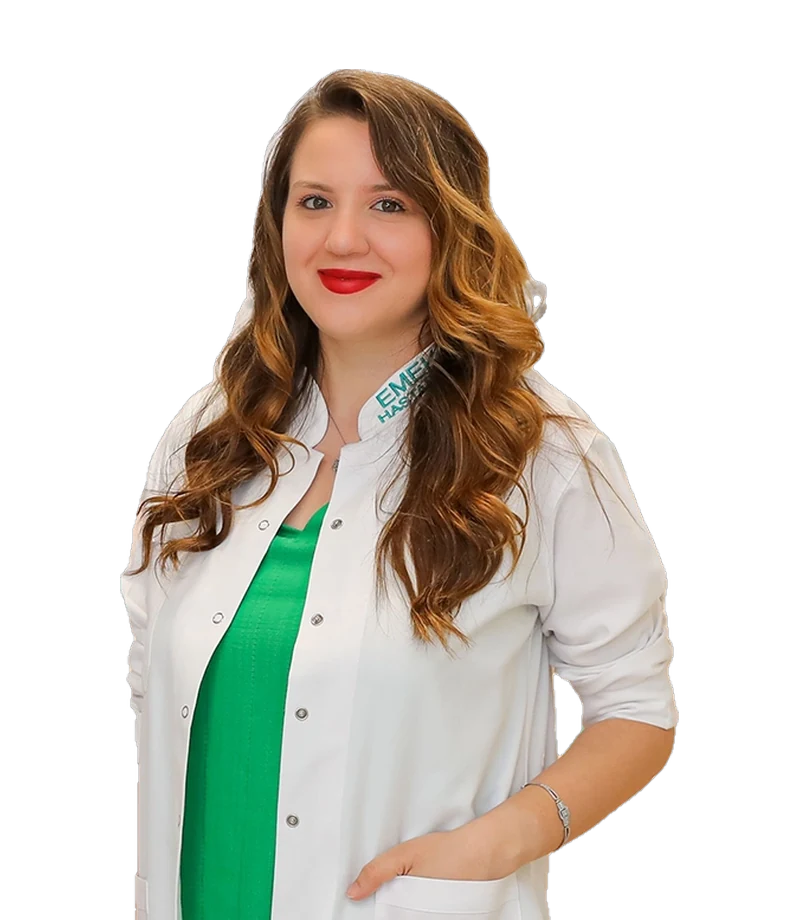
DietitianBehice Yediler
Diet and Nutrition
Book an appointmentAppointment
Not sure which department to go to?
Type your symptoms and we'll show you the right department and doctor.
Find a department by complaintDepartment
Today, the word “diet” is among the most dreaded words.
Our Doctors
Diet and Nutrition
Book an appointmentWhen we say diet meals, it gives the impression that they will be followed by a list of prohibitions, a piece of cheese the size of a matchbox and slogans such as “no to the three whites”.
Contrary to how it is commonly used, the word “diet” actually means an eating pattern. It is the eating plan best suited to the person and how well they can adapt it to their life; anything else is wasted effort.
Not a Diet, a Lifestyle!
Your diet menu should be prepared by your dietitian according to your health data, your living conditions, the foods you like and, most importantly, what you can realistically follow. Diet recipes should include a variety of foods so that we can get the wide range of nutrients our body needs. People start out enthusiastically, setting their initial goals very high, and then, as their motivation declines, small black holes open up in their eating pattern. For example, preparing a diet dinner comes to feel like enough, and later the person may give up altogether.
A healthy eating plan should provide us with the right amount of energy (calories) from food and drink to maintain energy balance. Energy balance means that the calories taken in from the diet are equal to the calories used by the body. You need these calories to carry out daily tasks such as walking and moving, and you also need them for all of the body's functions (for more functions than we can imagine). Calories are also required for breathing, pumping blood around the body, thinking and many similar reactions.
So food and drink provide the calories we need to use in our daily lives, but unfortunately taking in more calories than you need over a certain period of time leads to weight gain. This is because the calories we do not use are simply stored as fat.
More than 50% of adults in England are overweight or obese. In addition, overweight or obesity has been identified in 1 in 3 children aged 4-5 and 1 in 5 children aged 10-11. There is great concern about childhood obesity in England and all over the world. Being overweight as a child increases the risk of developing type 2 diabetes, heart disease and some cancers in adulthood. For this reason, maintaining an ideal weight is very important for health.
How much energy you should get from food and drink depends on many different factors, such as how active you are. Taking in as many calories as you need will help you maintain a healthy weight. However, choosing the right foods and drinks is not enough to stay healthy. These nutrients must also be taken in sufficient and balanced amounts.
Other departments