
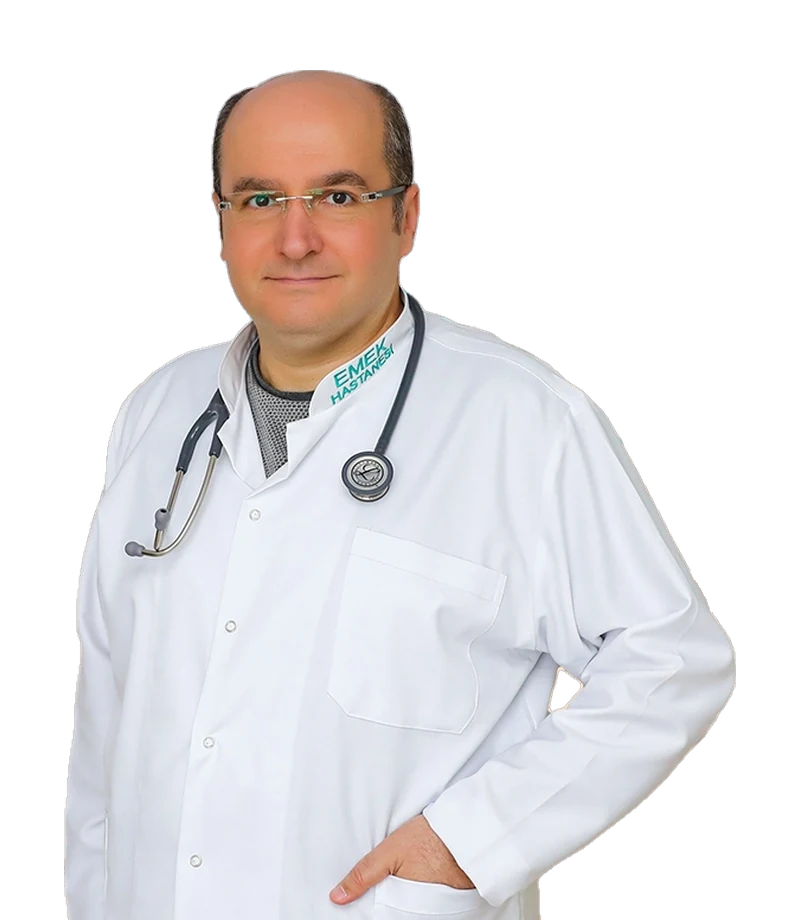
Assoc. Prof. Dr.Akif Doğantekin
Internal Medicine
Book an appointmentAppointment
Not sure which department to go to?
Type your symptoms and we'll show you the right department and doctor.
Find a department by complaintDepartment
Internal Medicine is generally regarded as the foundation for all branches of medicine.
Our Doctors
Internal Medicine
Book an appointmentInternal Medicine
Book an appointmentInternal Medicine is generally regarded as the foundation of all branches of medicine. In most patients who apply to hospitals and outpatient clinics, the complaint generally stems from internal diseases. For this reason, the internal medicine department is closely concerned with these diseases across a very broad field. Evaluating the patient objectively and treating them falls within the expertise of the internal medicine department. The specialists working in this department are generally authorised to use all treatment methods other than surgical intervention.
Internal medicine also serves as the starting point for treatment in a great many specialities. The departments with which the internal medicine department actively works are listed below.
These are the Cardiology, Endocrinology, Haematology, Nephrology, Gastroenterology, Oncology and Rheumatology departments.
Within internal medicine, the cardiology department works on heart conditions, the endocrinology department on hormonal disorders, the haematology department on blood diseases, the gastroenterology department on intestinal problems, the nephrology department on kidney conditions and the oncology department on cancer and muscle diseases. In addition to all of these, the internal medicine department, with its very broad range of departments, also forms the very first stage of treatment for infectious diseases and lung conditions.
Medical staff working in internal medicine are called internal medicine specialists. A doctor specialising in internal diseases, drawing on the competencies of the medical profession, is authorised to work in a great many areas. Accordingly, an internal medicine specialist listens to the patient's history, can perform a physical examination and, as a result, can request certain tests needed for diagnosis.
Referring the patient to other specialities for diagnosis is generally among the duties of an internal medicine doctor. Once the disease has been diagnosed, internal medicine specialists also offer a number of methods for its treatment. Internal medicine doctors do not work only in the emergency department or outpatient clinics; seriously ill patients in intensive care units are also followed up by internal medicine specialists when necessary. In addition, after making a diagnosis, an internal medicine specialist can, when required, refer the patient to the surgical department for an operation. For this reason, being an internal medicine doctor or specialist is a very valuable profession in today's conditions.
The internal medicine department covers diseases from almost every branch of medicine. Upper and lower respiratory tract conditions, rheumatism, stomach and intestinal conditions and diabetes are also treated within internal medicine. In addition to these diseases, hypertension, kidney diseases and thyroid conditions are also looked after by internal medicine doctors or specialists.
Flu, asthma, pneumonia, bronchitis, COPD and coronary heart disease also fall within the scope of internal medicine today. In general, patients also turn to internal medicine for anaemia, obesity, haemophilia, gout, hepatitis, osteoporosis, Mediterranean anaemia (thalassaemia) and cancer. Various complaints are encountered in patients who apply to the internal medicine department. Some of these are dry mouth, diarrhoea, abdominal pain, chest pain and constipation. Nausea, sweating, heartburn and blood pressure problems are also among patients' complaints. Internal medicine doctors or specialists take part in the treatment of these diseases.
Based on the history and complaints of the patient who comes to the internal medicine department, the necessary tests are carried out and treatment is recommended. In this context, the tests that may be requested from the patient include certain laboratory tests such as blood and urine tests, radiological examinations and endoscopic examinations. These include X-ray, MRI, ultrasound, mammography and computed tomography. In addition, upper gastrointestinal endoscopy and colonoscopy are also performed at the request of the internal medicine doctor. Besides these tests, when necessary, cardiological tests such as ECG are also performed for patients who apply to the internal medicine department, and diagnosis and treatment are provided.
Other departments